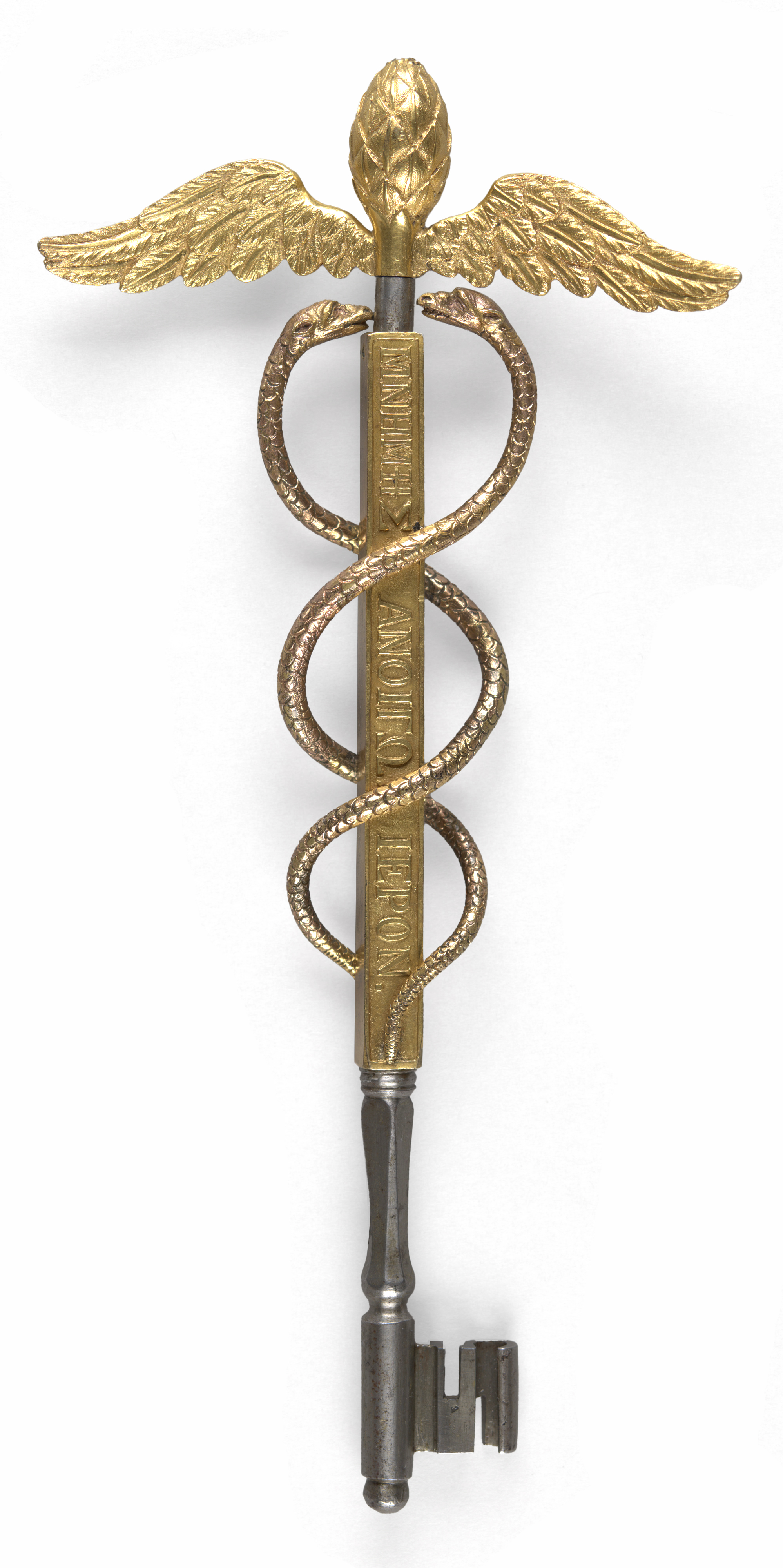
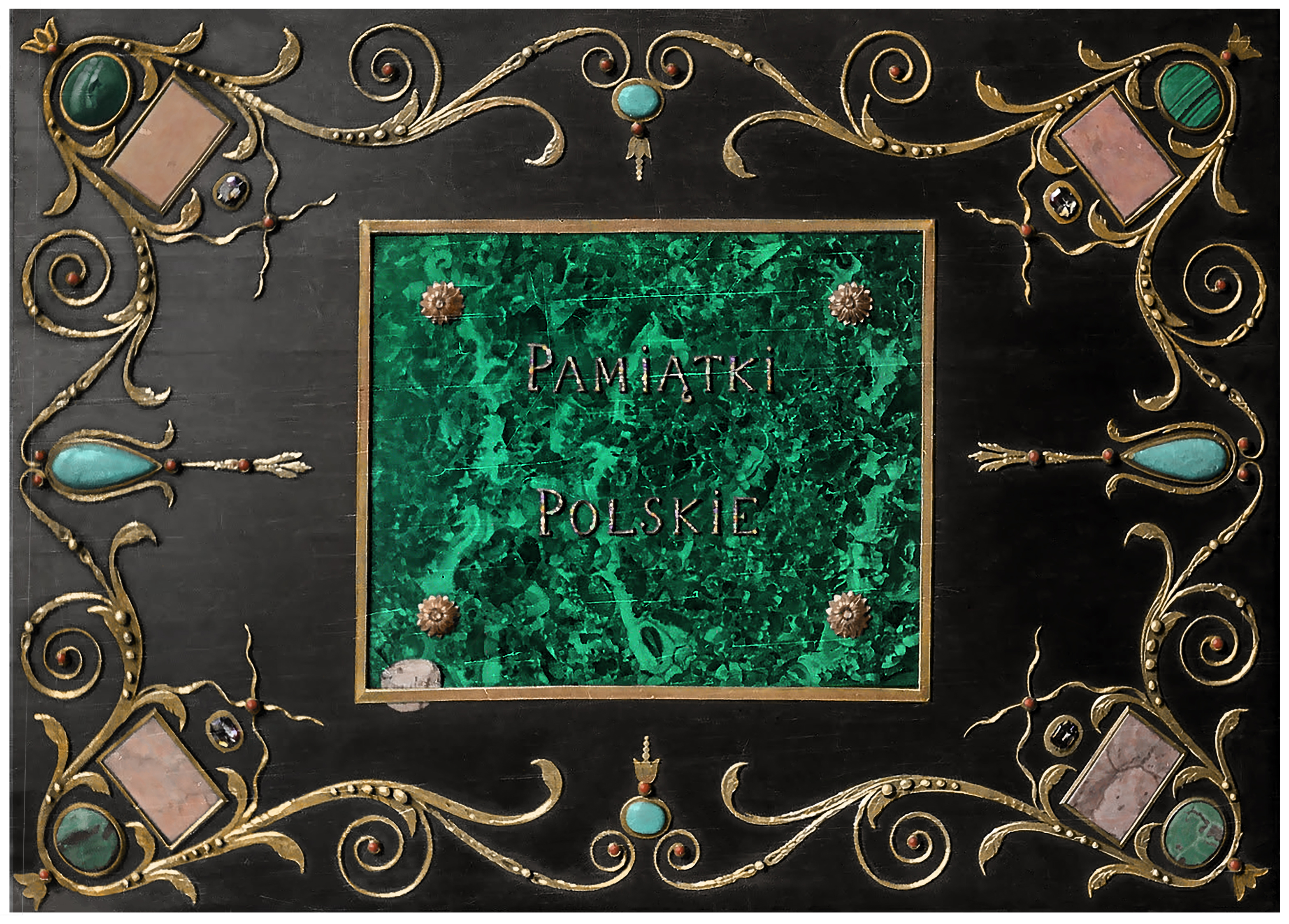
The potential appearance of the Royal Casket has been reconstructed based on available historical materials and an analysis of the distinctive features of the ornamental and precious stones used in its decoration. Colorization by Tomasz Wichrowski.
The Fate of the Royal Casket from the Sybil Temple in Puławy
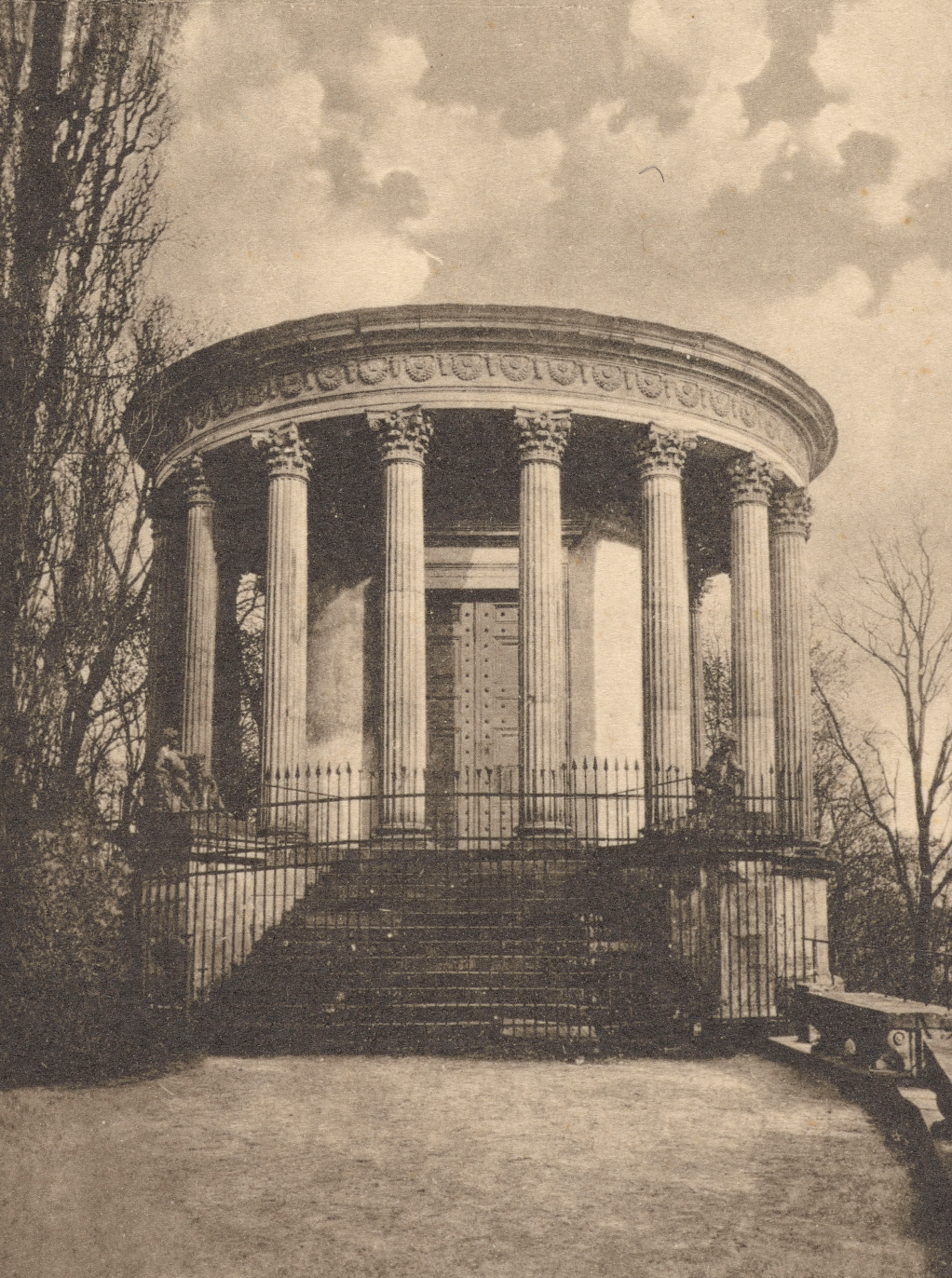
Immediately after the Prussians withdrew and the Austrians took over Kraków in 1796, Tadeusz Czacki, a member of the Crown Treasury Commission on behalf of the Sejm and the last inspector of the treasury, asked Emperor Francis II for the permission to secure some items that had survived the plunder. Among these were the famous Teutonic swords that King Władysław Jagiełło received before the Battle of Grunwald, the hilt of the consecrated sword belonging to the King Stefan Batory, the coronation shoes of the young Sigismund II Augustus, and the 12th-century Byzantine staurotheke. Czacki eventually handed these items, along with many others, particularly relics taken from royal coffins, to Princess Izabela for the Sybil Temple in Puławy. Poles long refused to believe in the loss of the coronation insignia, speculating about their miraculous survival. Their destruction was confirmed in documents by Marian Morelowski and Karol Estreicher Jr., and in our times, works on this subject were published by Jerzy Lileyko in Warsaw and Michał Rożek in Kraków.
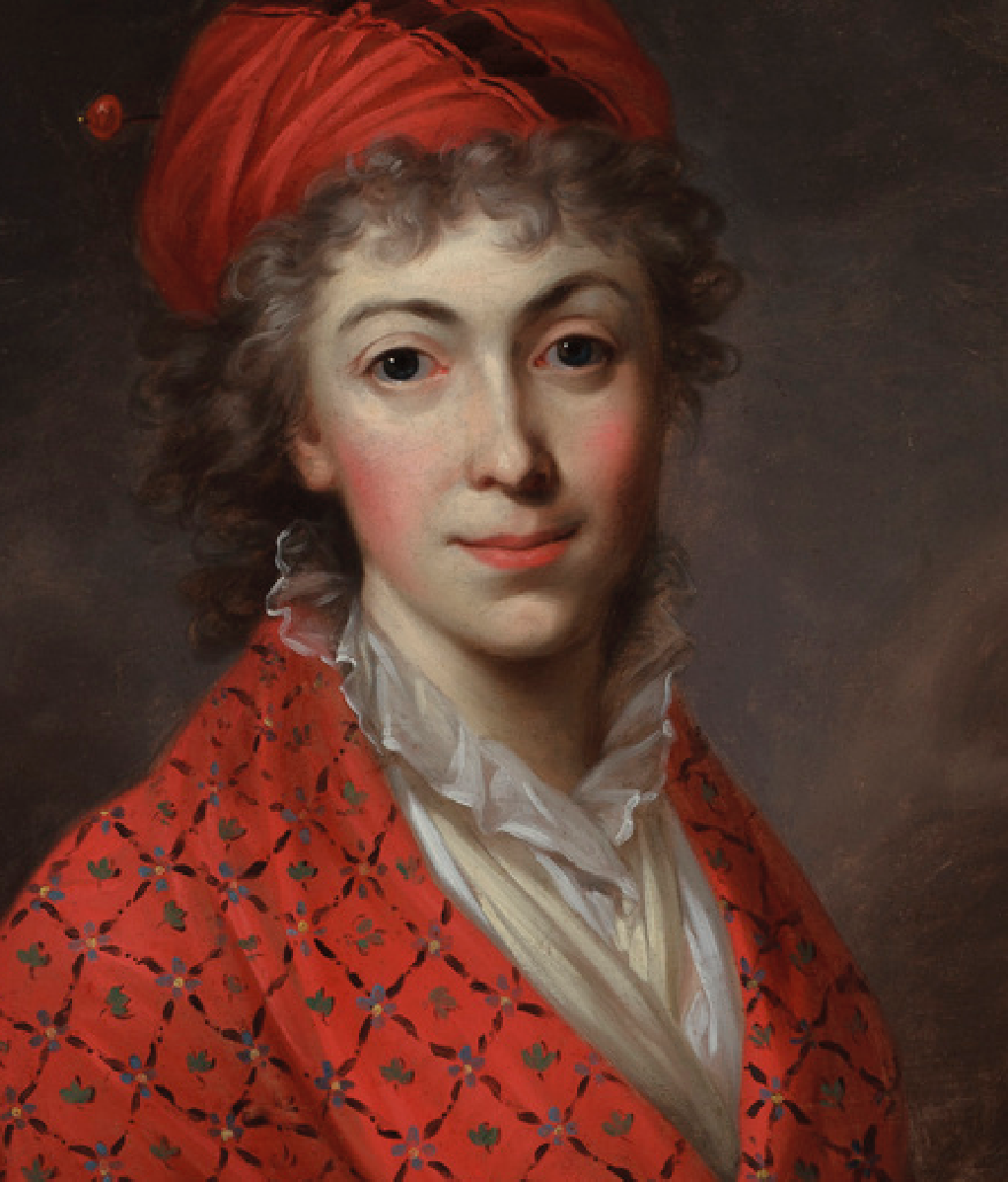
Czartoryska
Princess Izabela was well informed, mainly by Tadeusz Czacki, about the tragedy of the Polish
royal insignia. Her intention was to acquire as many memorabilia of Polish kings as possible to
compensate for the loss of the royal treasury. To this end, she drew primarily from family
treasuries, both her own and those of related and friendly families: Lubomirski, Potocki,
Sapieha, Ogiński, Radziwiłł, and many others. The result of her efforts was impressive. She
gathered dozens of memorabilia reliably or allegedly connected to Polish kings, particularly
golden chains, crosses, signet rings, medallions, watches, garment buttons, and fabric
fragments, even relics and small items taken from royal coffins. She described these objects and
enclosed them in a black ebony casket adorned with gold and diamonds, with three removable upper
compartments lined with green velvet. She placed it on a granite pedestal (still preserved in
Puławy) and covered it with a blue damask fabric adorned with multicolored flowers, lined with
crimson silk with a gold fringe and embroidered with a crown. The Royal Casket was the altar of
the temple and a substitute for the royal treasury. Its contents were shown to viewers only on
exceptional occasions. Presumably, only Princess Izabela could open it and explain its contents.
The casket was a key exhibit of this museum. In front of it, in a large niche opposite the
entrance, were the captured banners, ceremonial and trophy weapons, partly from the Wawel
treasury. Higher up on the walls hung panoplies of weapons dedicated to hetmans, while two large
semi-circular cabinets with glass drawers contained many different items related to Polish
history, including parchment documents, seals, coins, and medals. On top of the cabinets,
Princess Izabela placed urns with relics of kings, hetmans, scholars, and poets who had gained
fame in Poland.
After the fall of the November Uprising, Puławy deteriorated. Thanks to the energy of
the tireless, aged princess and the dedication of those at her disposal, the collections of the
Sybil Temple and the Gothic House were successfully evacuated, though not without significant
losses. Fleeing from Puławy to Sieniawa in Galicia, Princess Izabela personally took the Royal
Casket in her carriage, considering it her most precious treasure. After her death, Prince Adam
Jerzy Czartoryski (or perhaps his son and successor, Prince Władysław) transported the casket to
the family’s new residence in the Lambert Hotel in Paris. An image of the casket was published
in the monumental work by A. Przeździecki and E. Rastawiecki, „Medieval Art Forms in Old
Poland,” published in Warsaw and Paris between 1855 and 1858. It also included reproductions of
some of the casket’s relics. In 1876, in Kraków, Prince Władysław founded a new institution, the
Czartoryski Princes Museum. After some time, the casket was brought from Paris to Kraków, but it
was not displayed publicly, only stored in the well-guarded „Curiosities” storeroom. Over the
years, its contents changed, with more „royal” items added. Its interior, compartments, and
hideaways were modified, lined with new velvet. Prince Adam Ludwik Czartoryski, son of Prince
Władysław, donated various items from the casket to the Wawel treasury and the Jagiellonian
University treasury. The tragic year 1939 arrived. The caretaker of the Czartoryski collections
was Maria Ludwika Krasinska Czartoryska, widow of Prince Adam Ludwik, and the owner was her son
Augustyn. The museum was directed by General Marian Kukiel, with the expert curator of the
collections being Stefan Saturnin Komornicki. These individuals were responsible for preparing
the museum in case of war. General Kukiel proposed evacuating the most valuable items eastward
to the palace in Sieniawa, believing the war would be brief, as France and England would quickly
deal with Hitler. Princess Maria Ludwika disagreed, thinking the museum treasures would be safer
in the basement shelters. Ultimately, Kukiel’s opinion prevailed. In July 1939, the most
valuable artworks were selected: paintings by Leonardo, Raphael, and Rembrandt, illuminated
manuscripts, Persian carpets, Polish Słuck belts, saddles and horse gear, weapons, prints and
paintings, ancient gold and numismatics, and the Royal Casket. At the end of August, the
treasures were secretly transported in 16 crates to Sieniawa and bricked up in the palace
outbuilding’s basement.
The outbreak of the war brought a wave of misfortunes to Poland. All expectations and
hopes, especially for a swift action by France and England, were dashed. The Polish army was
unable to withstand the German onslaught. After a few days, Kraków was endangered. On September
8, General Kukiel left Kraków and went to Sieniawa to order the evacuation of the treasures. But
it was too late. The first German units entered Sieniawa on September 14. They soon took over
the manor and outbuilding. The shelter was likely betrayed by a local miller of German descent.
Soldiers broke through the wall and gained access to the shelter. They primarily looted gold and
gem-encrusted items. Paintings, carpets, and prints were simply abandoned. A dramatic struggle
ensued between the Czartoryski family and their loyal associates to save the remaining
treasures. The German gendarmerie and Gestapo became involved. The situation was further
complicated by the German-Soviet pact, which handed Sieniawa, located on the right bank of the
San River, to the Bolsheviks. Ultimately, the Czartoryski treasures were transported back to
Kraków, although the Gestapo retained the most valuable items for Hitler, including paintings by
Leonardo, Raphael, and Rembrandt. Most of the objects from the Royal Casket were lost. Thus, the
Germans completed the plunder of Polish regalia that began in 1795.
Until recently, it seemed that the iconographic records of the casket’s appearance and its
contents were fragmentary and had survived mainly in chromolithographs featured in the
aforementioned „Medieval Art Forms.”
In 1994, at the behest of the Government Plenipotentiary for Polish Cultural Heritage
Abroad, war losses inventories were verified and supplemented with photographic documentation.
For the first time, photographic prints were made from a roll of small-format film labeled
„Royal Casket. S.S. Komornicki.” The negatives turned out to contain complete photographic
documentation of the casket and its contents, likely taken in 1939, just before the evacuation
of the collections to Sieniawa. Based on these photographs, in conjunction with documents in the
museum, the appearance of the casket and all its contents can be precisely described.
The Fate of the Royal Casket in the Puławy Temple of the Sybil, “Cenne, Bezcenne/Utracone” No. 2 (8)/1998